



Introduction
In Ayurveda, your morning sets the tone for your entire day.
A balanced Dinacharya routine doesn’t just “wake you up” — it activates your prana, sharpens your mental clarity, strengthens digestion, stabilizes mood, and regulates hormonal flow.
A well-designed Ayurvedic morning routine can help:
- Boost energy without caffeine
- Reduce anxiety + mental fog
- Improve gut health (Agni)
- Support healthy weight and metabolism
- Enhance longevity
Let’s walk through the step-by-step, modern + traditional Dinacharya you can follow.
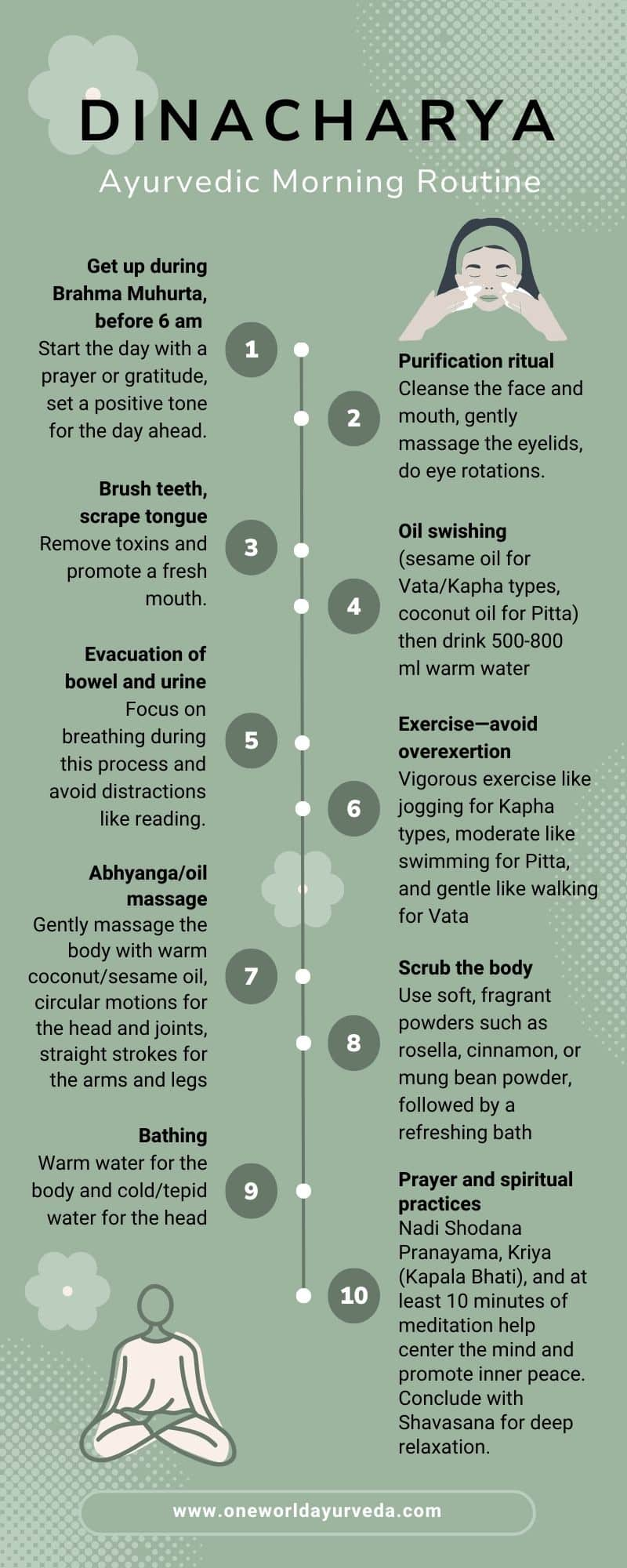
1. Wake Up During Brahma Muhurta (4:30–6:00 AM)

Why it matters:
This time is ruled by sattva, the energy of clarity and peace. Research also shows early waking syncs your circadian rhythm → boosting productivity, mood, and hormonal balance.

Benefits:
- Clearer mind
- Reduced anxiety
- Stronger immunity
- Better gut rhythm
If waking early is hard: shift slowly by 15 minutes every 3 days.
2. Start with Hydration — Warm Water or CCF Water
Traditional practice: Ushapana — drinking water stored in a copper vessel overnight.
Best options:
- Warm water (balances Vata + Kapha)
- Lemon water (gentle detox; avoid if high Pitta)
- CCF Water (Cumin + Coriander + Fennel) for digestion
Benefits:
Flush toxins
Kickstart bowel movement
Hydrate cellular function
3. Natural Elimination (Bowel Movement)
Ayurveda strongly recommends emptying the bowels early morning because Apana Vayu is naturally active.
If constipated:
- Drink warm water
- Add 1 tsp ghee before bed
- Increase fiber + hydration
4. Oral Care: Tongue Cleaning + Oil Pulling

Tongue Scraping
Removes ama (toxins) and improves taste, breath, and digestion.
Use: Copper or stainless steel scraper.
Oil Pulling (5–10 min)
Use sesame oil (Vata/Pitta) or coconut oil (Pitta/Kapha).

. Nasya: Lubricating the Nose
Instill 2 drops of warm Anu Taila or sesame oil in each nostril.
Benefits:
- Clears brain fog
- Reduces sinus blockage
- Improves voice + concentration
- Calms anxiety
🛁 6. Abhyanga: 10-Min Ayurvedic Self-Massage
Use warm sesame oil (universal), coconut oil (Pitta), or mustard oil (Kapha).
Technique:
Apply oil to head → feet → joints → abdomen (clockwise).

Benefits:
✔ Deep nervous system healing
✔ Glowing skin
✔ Better lymphatic circulation
✔ Stronger joints
✔ Reduced stress + anxiety
Skip on very humid days or during fever/cold.
7. Meditation, Pranayama & Breathwork (10–20 min)


This is where your mind becomes laser-focused for the whole day.
Best Morning Breathwork:
- Anulom Vilom – balances both brain hemispheres
- Bhramari – reduces anxiety instantly
- Kapalbhati – boosts energy + digestion
- Deep belly breathing – resets the nervous system
Meditation (5–20 min):
- Mantra meditation
- OM chanting
- Breath awareness
- Guided visualization
SECTION 8: YOGA / MOVEMENT — ACTIVATING PRANA





Movement is essential to circulate energy & remove stagnation.
Best morning yoga:
- Surya Namaskar (Sun Salutation)
- Cat-Cow
- Spinal twists
- Pawanmuktasana
Exercise by Dosha:
- Vata: Slow, grounding yoga
- Pitta: Cooling yoga, no overheating
- Kapha: Fast-paced exercise
SECTION 9: SUN EXPOSURE — AYURVEDIC CIRCADIAN RESET





Just 3–10 minutes of early sunlight:
- Boosts serotonin (happy hormone)
- Supports melatonin production
- Regulates sleep cycles
- Enhances energy
SECTION 10: AYURVEDIC BREAKFAST FOR ENERGY



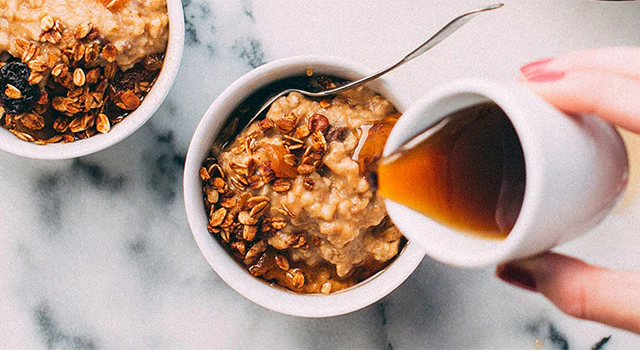

Best Ayurvedic Breakfasts:
- Stewed apple
- Moong dal cheela
- Warm spiced oatmeal
- Upma with ghee
- Herbal or CCF tea
Avoid:
- Cold smoothies
- Coffee on empty stomach
- Heavy fried foods
SECTION 11: DOSHA-SPECIFIC MORNING ROUTINES




VATA MORNING ROUTINE
- Wake gently
- Warm water + grounding herbs
- Sesame oil Abhyanga
- Gentle yoga
- Warm breakfast with ghee
PITTA MORNING ROUTINE
- Avoid overheating
- Cooling breathwork
- Coconut oil massage
- Light breakfast
- Avoid spicy/sour foods
KAPHA MORNING ROUTINE
- Wake before sunrise
- Light warm water with lemon
- Mustard oil massage
- Fast-paced workout
- Very light breakfast
SECTION 12: THE AYURVEDIC SCIENCE BEHIND MORNINGS (WHY MORNING ENERGY MATTERS)


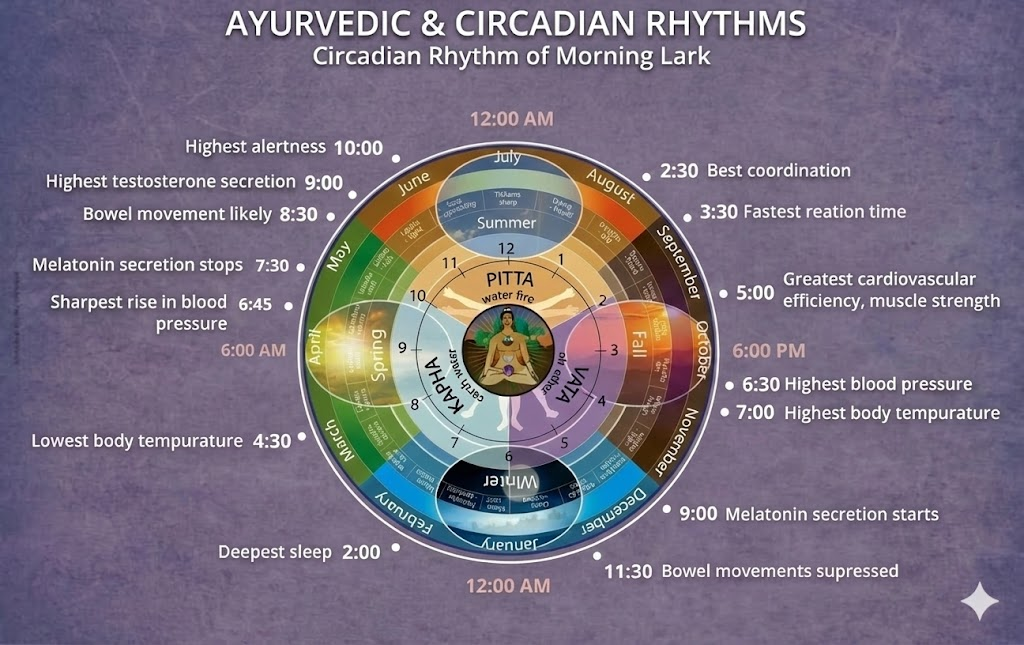
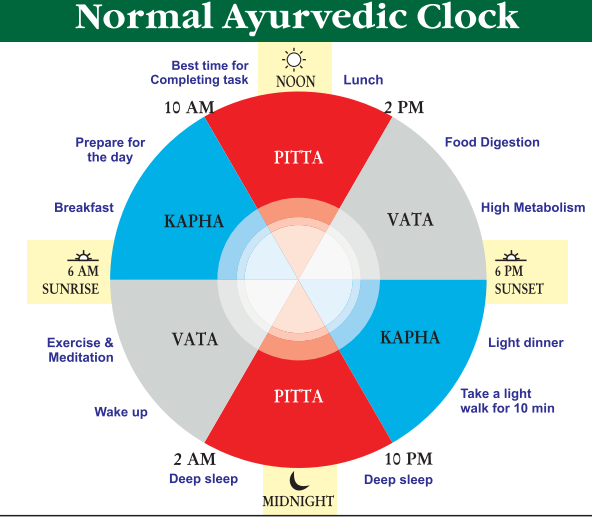
Ayurveda teaches that your body operates on a Dosha Clock, where each time of day is dominated by Vata, Pitta, or Kapha.
🕒 2 AM – 6 AM → VATA TIME
Light, subtle, clear energy.
Perfect for:
- Waking early
- Meditation
- Mental clarity
- Creative thinking
🕕 6 AM – 10 AM → KAPHA TIME
Heavy, slow, cloudy energy.
If you wake during Kapha time:
- You feel sluggish
- More mucus, heaviness
- Harder to get motivated
That’s why waking between 4:30–6:00 AM is ideal.
🕙 10 AM – 2 PM → PITTA TIME
Strong digestive fire.
Best for:
- Heavy meals
- Deep work
- Decision-making
Understanding this natural rhythm is the foundation of Dinacharya.
Ayurveda teaches that your body operates on a Dosha Clock, where each time of day is dominated by Vata, Pitta, or Kapha.
🕒 2 AM – 6 AM → VATA TIME
Light, subtle, clear energy.
Perfect for:
- Waking early
- Meditation
- Mental clarity
- Creative thinking
🕕 6 AM – 10 AM → KAPHA TIME
Heavy, slow, cloudy energy.
If you wake during Kapha time:
- You feel sluggish
- More mucus, heaviness
- Harder to get motivated
That’s why waking between 4:30–6:00 AM is ideal.
🕙 10 AM – 2 PM → PITTA TIME
Strong digestive fire.
Best for:
- Heavy meals
- Deep work
- Decision-making
Understanding this natural rhythm is the foundation of Dinacharya.

Ayurvedic Morning Routine is documented in:
📜 Charaka Samhita – Sutrasthana 5
Recommends:
- Brahma Muhurta wake-up
- Tongue cleaning
- Nasya
- Abhyanga
- Udvartana (herbal exfoliation)
- Meditation
📜 Ashtanga Hridayam – Dinacharya Chapter
Explains:
- Oil pulling
- Ear oiling (Karna Purana)
- Eye cleansing
- Seasonal morning adjustments
These texts emphasize that daily routine is more important than medicine for health.
SECTION 14: MENTAL CLARITY RITUALS (BRAIN-ACTIVATING PRACTICES)


1️⃣ Nadi Shodhana (Anulom Vilom)
Balances brain hemispheres, reduces anxiety, improves focus.
2️⃣ Bhramari (Humming Bee Breath)
Instantly calms the mind and decreases overthinking.
3️⃣ Trataka (Candle Gazing)
Builds concentration and stabilizes wandering thoughts.
4️⃣ OM Chanting
Vibrational healing → strengthens the prefrontal cortex.
5️⃣ Mind-Dumping Journaling
Releases emotional clutter & increases clarity.
SECTION 15: HERBS FOR MORNING ENERGY & MENTAL SHARPNESS

Top 10 Ayurvedic Herbs for Morning Energy:
| Herb | Benefits |
|---|---|
| Ashwagandha | Reduces stress, improves stamina |
| Brahmi | Boosts memory & clarity |
| Shankhpushpi | Cognitive enhancement |
| Tulsi | Clears respiratory tract, energizes |
| Licorice (Yashtimadhu) | Soothes digestion + adrenals |
| Ginger | Improves Agni (digestion fire) |
| Turmeric | Anti-inflammatory, boosts immunity |
| Gokshura | Strengthens kidneys + stamina |
| Amla | Vitamin C powerhouse |
| Ghee | Nourishes brain, improves Ojas |
SECTION 16: HERBAL MORNING DRINK RECIPES
Perfect for energy + digestion

1. CCF TEA (Cumin + Coriander + Fennel)
- ½ tsp cumin
- ½ tsp coriander
- ½ tsp fennel
Boil 5–7 min.
✔ Reduces gas
✔ Improves digestion
✔ Balances all doshas
⭐ 2. Ginger–Lemon Digestive Shot
Hot water + fresh ginger + lemon + honey (optional).
✔ Kickstarts metabolism
✔ Clears Kapha
⭐ 3. Brahmi Rose Latte
Warm milk + brahmi powder + rose + cardamom.
✔ Improves mental clarity
✔ Calms stress
SECTION 17: SKIN CARE IN THE MORNING (AYURVEDIC BEAUTY RITUALS)

Your skin renews during the night. Morning rituals remove toxins and increase glow.
⭐ Ayurvedic Morning Beauty Routine:
- Splash face with cool water
- Rose water spritz
- Apply kumkumadi oil
- Gentle massage
- Use Ubtan (herbal exfoliation) once weekly
Best ingredients for glow:
- Turmeric
- Sandalwood
- Rose
- Multani mitti
- Neem
- Amla
SECTION 18: MORNING ROUTINE FOR SPECIFIC GROUPS
1️⃣ Working Professionals


- Wake 5:30 AM
- Quick meditation
- CCF water
- Fast yoga (10 mins)
- Light breakfast
- Carry herbal tea to office
2️⃣ Students
- Wake 5–6 AM
- Brahmi tea
- 10-min breathwork
- Study during Vata time for better memory
3️⃣ Women (Hormonal Balance Focus)

Warm sesame oil massage
Iron-rich breakfast
Shatavari in morning milk
Avoid coffee empty stomach
4️⃣ Seniors

- Very gentle yoga
- Warm water
- Nasya + oil massage
- Brahmi + ghee for memory
SECTION 19: SEASONAL MORNING ROUTINE (RITUCHARYA)
SPRING (Kapha season)
- Light breakfast
- Fast-paced yoga
- Honey water
☀️ SUMMER (Pitta season)
- Coconut water
- Cooling pranayama
- Avoid sun after 8 AM
🍁 AUTUMN (Vata season)
- Warm oil massage
- Heavy, grounding breakfast
❄️ WINTER (Kapha + Vata)
- Sesame oil massage
- Hot soups
- Sun exposure
SECTION 20: COMPLETE 60-MINUTE AYURVEDIC MORNING ROUTINE
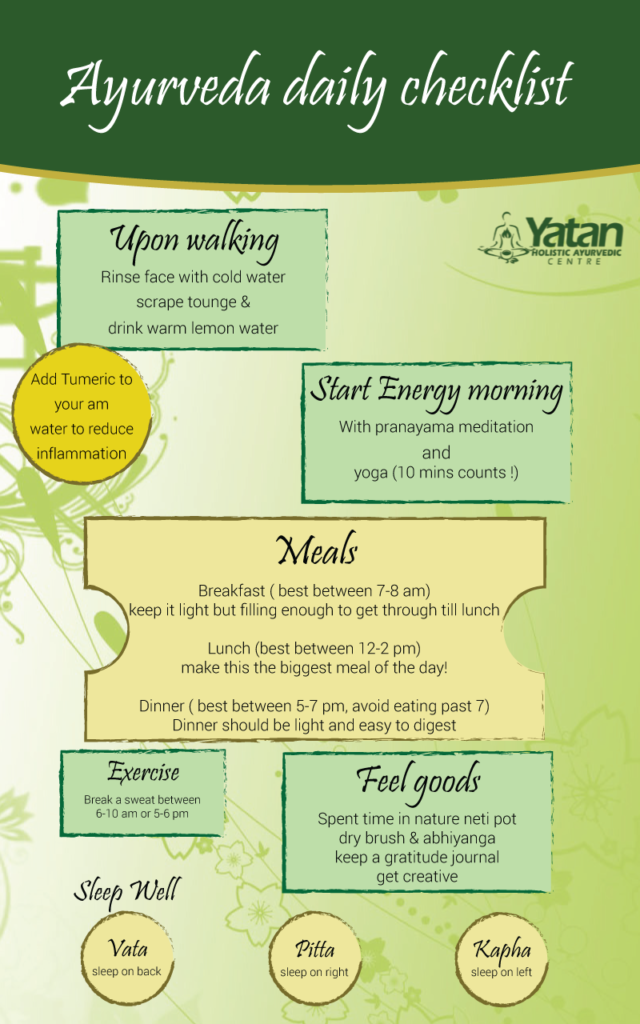
Your 1-hour Dinacharya Plan:
| Time | Activity |
|---|---|
| 5:30 | Wake up |
| 5:35 | Warm water + elimination |
| 5:45 | Tongue scraping + oil pulling |
| 5:55 | Nasya |
| 6:00 | Abhyanga |
| 6:15 | Bath |
| 6:25 | Meditation + breathwork |
| 6:40 | Yoga |
| 6:55 | Sun exposure |
| 7:00 | Breakfast |
SECTION 21: MODERN SCIENCE BACKING AYURVEDIC MORNING PRACTICES

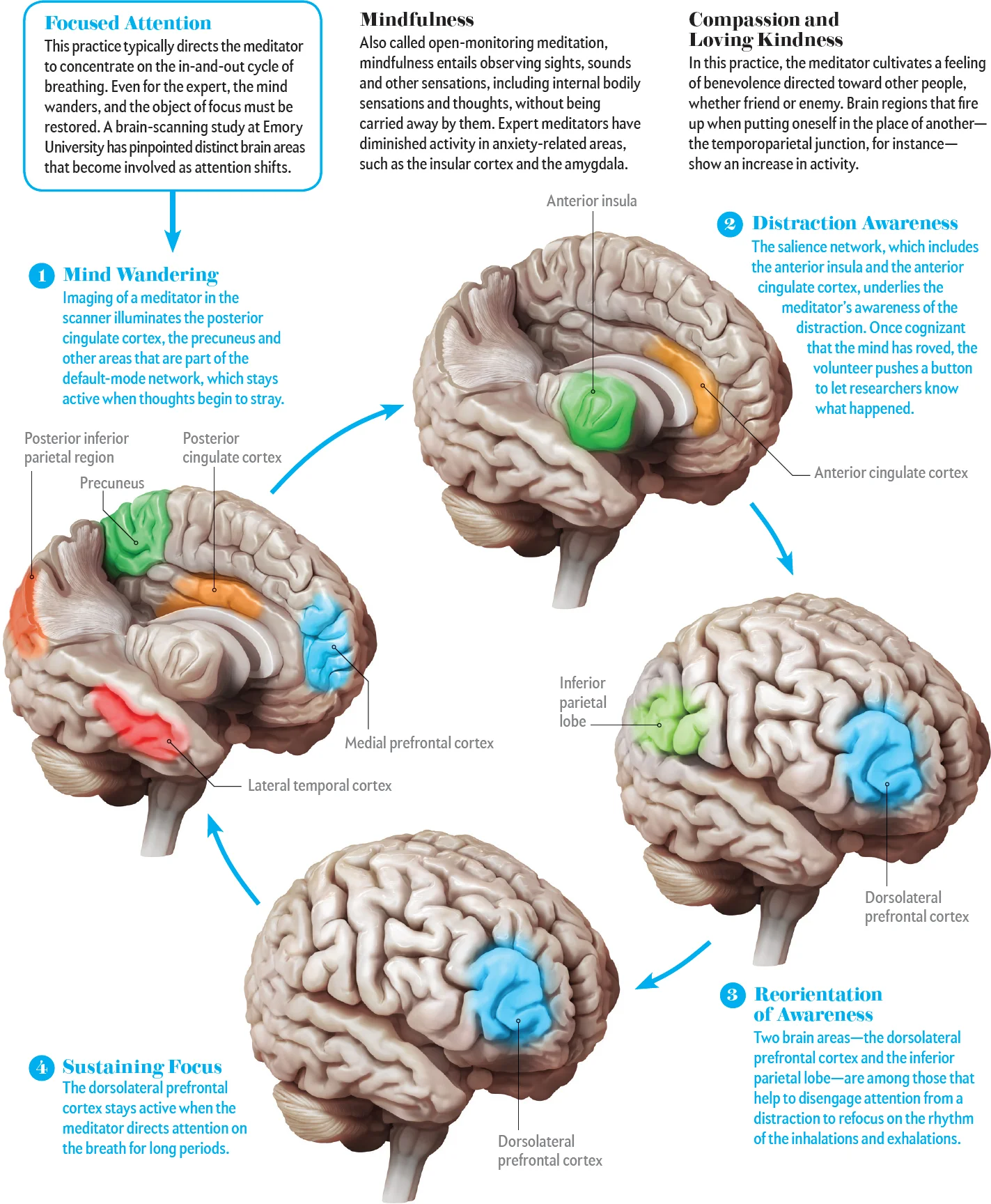
✓ Early waking improves cognition
✓ Oil pulling reduces bacteria by 80%
✓ Breathwork improves oxygenation
✓ Sunlight enhances serotonin
✓ Yoga improves lymphatic detox
SECTION 22: SPIRITUAL LAYER OF DINACHARYA

Ayurveda views mornings as the gateway to:
- Higher consciousness
- Sattva increase
- Emotional purification
- Mental clarity
- Deep intuition
Prayer, gratitude, mantra chanting & journaling amplify these states.
25 POWERFUL AYURVEDIC FAQs

1. What is the Ayurvedic Morning Routine (Dinacharya)?
It is a holistic sequence of daily practices—including waking early, cleansing, oiling, meditation, yoga, and mindful eating—designed to align your body with nature’s rhythms and enhance energy + clarity.
2. Why is Brahma Muhurta the best time to wake up according to Ayurveda?
Because this time is dominated by sattva, the guna of purity, clarity, and intelligence. The mind is naturally calm and receptive, making meditation and concentration easier.
3. What should I drink first thing in the morning?
Warm water, CCF tea, lemon water, or copper-vessel water. These stimulate digestion, support detox, and activate Agni.
4. Can I drink coffee in the morning in Ayurveda?
Not on an empty stomach. Ayurveda recommends having coffee after breakfast to avoid increasing acidity, anxiety, and Pitta imbalance.
5. How important is tongue scraping in the morning?
Very. It removes overnight toxins, improves taste, boosts digestion, and reduces bad breath.
6. How long should I do oil pulling?
5–10 minutes is enough. Do it before brushing your teeth.
7. Can beginners do Nasya oil?
Yes. Start with 2 drops of warm sesame or Anu Taila in each nostril after cleansing the face.
8. Is Abhyanga safe to do every morning?
Absolutely. Daily oil massage is one of the most nourishing Ayurvedic practices. Avoid only during fever, indigestion, or acute illness.
9. What is the best morning yoga routine for energy?
Surya Namaskar, cat–cow, Pawanmuktasana, spinal twists, and light stretching.
10. How long should the full Ayurvedic Morning Routine take?
60–90 minutes for the full version, 20–30 minutes for a quick routine.
11. Does Dinacharya help with anxiety and stress?
YES. Especially: breathwork, Nasya, Abhyanga, and early morning meditation.
12. What is the ideal Ayurvedic breakfast?
Warm, light, and easy to digest: stewed apple, oatmeal, moong dal chilla, upma, or porridge with spices.
13. Can I follow Dinacharya during menstruation?
Yes, but avoid heavy exercise and long Abhyanga sessions. Choose gentle practices.
14. Can seniors follow this morning routine?
Yes! With modifications: slower yoga, lighter oil massage, warm foods, and memory-enhancing herbs like Brahmi.
15. What is the best morning routine for weight loss?
Wake up early, warm water, lemon/honey, fast-paced yoga (Kapha style), and light breakfast.
16. Which herbs increase morning energy naturally?
Ashwagandha, Brahmi, Tulsi, Shankhpushpi, ginger, and Amla.
17. Can I skip breakfast in Ayurveda?
Not recommended. Skipping breakfast weakens Agni and increases Vata imbalance.
18. Is cold water harmful in the morning?
Yes. Cold water slows digestion, weakens Agni, and reduces circulation.
19. Can children follow a morning routine?
Yes—just simplify it: warm water, light stretching, and a healthy breakfast.
20. How does morning sunlight improve mental clarity?
Sunlight increases serotonin, regulates melatonin, boosts mood, and sharpens focus.
21. Can Dinacharya help with hormonal balance?
Yes! Early waking, sesame oil massage, cooling breathing, and Shatavari support female hormones.
22. Which practices help with brain fog?
Nasya, Brahmi, OM chanting, and early sunlight.
23. Should I meditate before or after yoga?
Both sequences work, but traditionally breathwork → yoga → meditation is ideal.
24. How many Surya Namaskars should I do in the morning?
Start with 3–6 rounds; increase gradually to 12 rounds for full-body activation.
25. Is Dinacharya effective for modern lifestyles?
YES — it is one of the BEST antidotes to stress, anxiety, digestive issues, insomnia, and mental overload.
SECTION 24: COMPLETE CONCLUSION — WHY DINACHARYA TRANSFORMS YOUR LIFE

An Ayurvedic Morning Routine is not just a list of tasks—
it is a philosophy, a rhythm, a lifestyle, and a path to:
✨ High energy
✨ Deep mental clarity
✨ Hormonal balance
✨ Strong digestion
✨ Radiant skin
✨ Emotional stability
✨ Better sleep
✨ Strong immunity
You reconnect with your inner intelligence.
You sync with the natural cycles of Earth.
You realign your body, mind, and spirit.
Even following just 3–5 practices daily can transform your life within 21 days.
Dinacharya is Ayurveda’s greatest gift — a timeless science that continues to heal millions.