For years, many people joined gyms with a simple goal: build bigger muscles, lose body fat, or achieve a more attractive physique. Traditional bodybuilding, isolation exercises, and machine-based workouts became popular ways to measure fitness progress. While these approaches remain valuable, a growing number of gym-goers are beginning to ask a different question: How can exercise make everyday life easier?
This question has helped bring functional fitness into the spotlight.
Functional fitness focuses on developing strength, balance, coordination, mobility, stability, and endurance that support everyday movements. Instead of training exclusively to improve how a muscle looks, functional fitness emphasizes how the body moves and performs during practical activities.
Think about lifting a heavy suitcase, carrying grocery bags, climbing stairs, getting up from the floor, playing sports, or moving furniture. These activities require more than isolated muscle strength. They involve multiple muscle groups working together, joints moving through appropriate ranges of motion, and the nervous system coordinating movement efficiently.
That is the foundation of functional fitness.
Whether you are a beginner, an experienced gym-goer, a busy professional, or someone returning to exercise after a long break, functional fitness can help you develop a more versatile approach to training.
The goal is not to abandon traditional strength training or bodybuilding. Instead, it is to combine effective strength-building exercises with movements that support practical, everyday performance.
In this comprehensive guide, we will explore what functional fitness means, why it is becoming increasingly popular, its major benefits, the best exercises to include in your routine, and how to build a balanced functional fitness workout that supports long-term health and performance.
1. What Is Functional Fitness?
Functional fitness is a training approach that develops physical abilities used in everyday activities, recreational pursuits, sports, and other practical situations.
It generally involves exercises that train several muscle groups and movement patterns together. These movements may include squatting, hinging at the hips, pushing, pulling, carrying, rotating, stepping, and stabilizing the body.
For example, a squat strengthens muscles involved in sitting down and standing up. A loaded carry challenges your ability to walk while holding weight. A step-up trains movements similar to climbing stairs, while a controlled hip hinge develops strength that can help you lift objects from the floor with better movement awareness.
These examples demonstrate how functional fitness connects gym training with practical physical abilities.
Functional Fitness vs. Traditional Gym Training
Traditional gym training often includes exercises designed to target specific muscles. Biceps curls, triceps extensions, leg extensions, and lateral raises can help develop individual muscles and improve muscular strength or size.
Functional fitness usually places greater emphasis on coordinated movements involving multiple joints and muscle groups.
However, these approaches are not opposites.
A well-designed fitness program can include both compound movements and isolation exercises. Compound exercises develop strength across coordinated movement patterns, while isolation exercises can help strengthen particular muscles that need additional attention.
For example, a person might combine squats, rows, and loaded carries with hamstring curls, calf raises, and shoulder exercises.
This balanced approach supports overall muscular development while improving the physical capacities needed for everyday activities.
The Main Components of Functional Fitness
A comprehensive functional fitness program typically develops several interconnected abilities.
Strength: The ability to produce force when lifting, pushing, pulling, or carrying objects.
Mobility: The ability to move joints through the ranges of motion required for specific activities.
Stability: The ability to control body position during movement and maintain appropriate alignment.
Balance: The ability to maintain or regain control of your body’s position, whether standing still or moving.
Coordination: The ability to organize different body movements smoothly and efficiently.
Muscular endurance: The ability to sustain repeated movements or muscular effort over time.
Cardiorespiratory fitness: The ability of the heart and lungs to support physical activity.
Functional fitness does not require every workout to train all these qualities equally. Instead, the aim is to develop an appropriate combination based on your age, current fitness level, goals, and daily activities.
2. Why More Gym-Goers Are Choosing Functional Fitness
The popularity of functional fitness reflects a broader shift in how people think about exercise.
Looking stronger remains an important motivation, but many gym-goers also want to feel stronger, move comfortably, maintain independence, and perform everyday tasks without unnecessary difficulty.
A. Fitness That Supports Everyday Life
A workout becomes especially meaningful when its benefits extend beyond the gym.
Functional fitness encourages people to practice movement patterns that have practical applications. Squatting, carrying, stepping, pulling, and lifting are common activities that require coordinated muscular effort.
For example, a person who regularly trains controlled squats and step-ups may develop greater lower-body strength for activities such as climbing stairs or rising from a chair.
Someone who performs rows and carries may develop stronger back, shoulder, grip, and trunk muscles that contribute to lifting and carrying tasks.
The transfer from exercise to everyday performance depends on exercise selection, training consistency, technique, and the individual’s needs. Nevertheless, training relevant movement patterns gives people a practical reason to exercise regularly.
B. A More Complete Approach to Strength
Traditional bodybuilding often emphasizes individual muscle development. Functional fitness broadens the objective by considering how muscles work together.
For example, lifting a box from the floor requires coordinated activity from the legs, hips, trunk, back, and arms. The task also involves balance, grip strength, and movement control.
A functional fitness routine can prepare the body for these combined demands by developing strength across multiple movement patterns.
This does not mean every exercise must involve the entire body. Rather, the training program should develop the physical qualities needed for a wide range of activities.
C. Greater Emphasis on Mobility and Movement Quality
Many people spend significant portions of their day sitting at desks, working on computers, commuting, or using mobile devices.
A sedentary routine can reduce opportunities to practice a variety of movements. Some people may consequently feel stiff, weak, or uncomfortable when performing unfamiliar physical tasks.
Functional fitness can encourage regular movement through exercises such as controlled squats, hip hinges, step-ups, carries, and appropriately selected mobility drills.
These activities help people practice moving with control and build strength within the ranges of motion relevant to their goals.
However, exercise cannot guarantee the prevention or elimination of pain. Persistent discomfort, restricted movement, or recurring injuries may require assessment by a qualified healthcare professional.
D. Training That Can Be Adapted to Different Fitness Levels
Functional fitness is not reserved for professional athletes or advanced gym members.
Beginners can start with chair squats, wall push-ups, supported step-ups, light carries, and resistance-band rows. As strength and coordination improve, they can gradually progress to more challenging variations.
Experienced lifters can incorporate unilateral exercises, heavier carries, controlled rotational movements, and more demanding conditioning sessions.
The essential principle is to match exercise difficulty to current ability rather than copying an advanced workout without preparation.
E. A Practical Alternative to Complicated Routines
Some people find traditional gym routines overwhelming because they involve numerous exercises, machines, and complicated training splits.
Functional fitness can simplify exercise selection by organizing sessions around fundamental movement patterns.
A balanced workout might include a squat, a hip hinge, a push, a pull, a carry, and a short conditioning exercise.
This approach makes it easier to identify what each exercise contributes to the overall program.
It can also help busy individuals prioritize movements that provide broad training benefits without requiring an unnecessarily long list of exercises.
The central idea is simple: Functional fitness makes exercise more purposeful by connecting physical training with the demands of real life.
3. The 10 Powerful Benefits of Functional Fitness
Functional fitness offers a range of potential benefits when exercises are selected appropriately and performed consistently. The results depend on training frequency, effort, recovery, nutrition, and individual circumstances.
Let’s examine ten important reasons to include functional fitness in your gym routine.
Benefit 1: Builds Real-Life Strength
One of the biggest advantages of functional fitness is its emphasis on practical strength.
Muscular strength helps you perform physical tasks that require force, from lifting household objects to carrying luggage and moving equipment. Functional training develops this ability through exercises that challenge multiple muscles and movement patterns.
For example, deadlifts train hip extension and the coordinated production of force through the lower body and trunk. Farmer’s carries challenge grip strength, posture, and the ability to walk while holding weight.
Squats strengthen the muscles used to lower and raise the body, while rows help develop the pulling strength required for various daily tasks.
These exercises do not perfectly reproduce every real-world activity, but they develop physical capacities that can support a wide range of movements.
The key is progressive overload. As your body adapts, you can gradually increase resistance, repetitions, range of motion, or exercise difficulty when appropriate.
Functional fitness transforms strength training from a purely appearance-focused activity into a tool for improving physical capability.
Benefit 2: Improves Balance and Coordination
Balance and coordination influence how efficiently you move through your environment.
Walking on uneven surfaces, changing direction, stepping over obstacles, and reaching for objects all require your body to coordinate different movements.
Functional fitness can help develop these abilities through exercises that challenge stability and controlled movement.
Examples include supported single-leg stands, step-ups, split squats, and carefully performed single-leg Romanian deadlifts.
These exercises challenge the muscles responsible for controlling the hips, knees, ankles, and trunk.
Beginners should start with stable positions and appropriate support. Advanced balance exercises are not automatically better, particularly when they compromise technique or create unnecessary fall risks.
A practical approach is to develop strength first and then gradually introduce more demanding balance challenges.
Over time, this training may help improve balance-related performance, although results vary depending on the exercises and the individual.
Benefit 3: Supports Mobility and Flexibility
Mobility is an important part of functional fitness because everyday activities often require joints to move through a useful range of motion.
For instance, getting into a low cupboard, reaching overhead, or sitting comfortably on the floor may require a combination of joint mobility, muscular strength, and movement control.
Exercises such as controlled squats, lunges, hip hinges, and overhead reaches can help develop strength through appropriate ranges of motion.
Mobility drills may also be useful when a particular joint movement is restricted.
It is important to distinguish mobility from flexibility. Flexibility generally refers to the ability of muscles and other tissues to lengthen, while mobility involves moving a joint through a range of motion with control.
Both can contribute to comfortable movement.
However, greater flexibility alone does not guarantee better functional performance. Strength, coordination, and the ability to control a movement are also important.
A balanced functional fitness routine should therefore include both mobility work and resistance training.
Benefit 4: Strengthens the Core
The core includes muscles around the abdomen, back, pelvis, and trunk that contribute to controlling the body’s position and transferring force between the upper and lower body.
A strong, well-coordinated trunk can support many physical activities, including lifting, carrying, pushing, pulling, and changing direction.
Functional fitness incorporates core training through exercises such as planks, dead bugs, bird dogs, and loaded carries.
These exercises challenge different aspects of trunk control.
For example, planks train the ability to maintain a controlled position, while dead bugs encourage coordination between the arms, legs, and trunk.
Farmer’s carries challenge the trunk to maintain control while the body moves under load.
Not every core exercise needs to involve repeated abdominal crunches. Training the trunk to resist unwanted movement can also be useful.
The goal is not simply to develop visible abdominal muscles. It is to build the strength and control needed to support movement throughout the body.
Benefit 5: Develops Muscular Endurance
Many everyday activities require repeated effort rather than a single powerful movement.
Walking up several flights of stairs, carrying groceries from a car, cleaning a room, or spending time gardening can involve sustained muscular work.
Functional fitness can improve muscular endurance through repeated exercises, moderate-load resistance training, carries, step-ups, and appropriately designed circuits.
For example, a circuit might include bodyweight squats, resistance-band rows, step-ups, and light carries, with planned rest periods between rounds.
As your fitness improves, you can gradually increase the number of repetitions or rounds without allowing fatigue to undermine your technique.
Muscular endurance is different from maximal strength. A person may be capable of lifting a heavy weight once but struggle to repeat a lighter movement many times.
A comprehensive functional fitness program can address both qualities.
also read: Smart Strength Training: How to Get Stronger Without Wasting Time
Benefit 6: Supports Cardiovascular Fitness
Functional fitness is not limited to resistance training. It can also include activities that challenge the cardiovascular system.
Brisk walking, cycling, rowing, step-ups, and suitable circuit workouts can raise the heart rate and contribute to overall physical activity.
For example, alternating a resistance exercise with a short period of low-impact aerobic activity can create a time-efficient training session.
However, not every functional fitness workout provides sufficient cardiovascular training. Heavy strength sets with long rest periods may improve strength without delivering the same aerobic stimulus as sustained walking, cycling, or running.
For general health, the World Health Organization recommends that adults aim for at least 150–300 minutes of moderate-intensity aerobic activity or 75–150 minutes of vigorous-intensity aerobic activity per week, or an equivalent combination. Adults should also perform muscle-strengthening activities involving major muscle groups on at least two days each week.
People who are currently inactive can begin with smaller amounts and increase activity gradually.
Functional fitness can complement these recommendations, but it should not be assumed to replace all aerobic exercise.
Benefit 7: Helps Develop Grip Strength
Grip strength plays a role in many physical activities, including carrying bags, opening containers, handling tools, and lifting weights.
Functional fitness frequently incorporates loaded carries, dumbbell exercises, kettlebell movements, and other activities that require the hands to hold resistance.
Farmer’s carries are particularly useful because they combine grip work with walking, trunk control, and whole-body stability.
To perform a farmer’s carry, hold an appropriate weight in each hand, stand tall, and walk a controlled distance while maintaining a comfortable posture.
Start with manageable loads and short distances. Increase the challenge gradually as your grip and overall conditioning improve.
If grip fatigue limits your ability to perform other exercises safely, reduce the load or distance rather than pushing through deteriorating technique.
Grip strength is only one component of physical fitness, but training it can add practical value to a well-rounded routine.
Benefit 8: Encourages Better Movement Awareness
Functional fitness often requires attention to posture, joint position, balance, and coordination.
Learning to squat with control, hinge at the hips, stabilize the trunk, and maintain a secure grip can help you become more aware of how your body moves.
This awareness may be useful when learning new exercises or managing challenging physical tasks.
For example, a hip hinge teaches you to bend through the hips while maintaining control of the trunk. Practicing the movement with a light weight or without resistance can help you understand the pattern before progressing to heavier loads.
Movement awareness does not mean that there is only one perfect posture for every activity. Human movement naturally varies, and the most appropriate technique depends on the task, the individual’s abilities, and the load involved.
The goal is to develop sufficient control to perform exercises safely and efficiently.
Benefit 9: Supports Healthy Aging and Independence
Maintaining strength, balance, endurance, and mobility becomes increasingly important as people age.
Everyday activities such as standing from a chair, climbing stairs, carrying shopping, and walking outdoors can become more challenging when physical capacity declines.
Appropriately designed resistance training can help older adults maintain or improve strength and physical function. Balance training and aerobic activity can also play important roles in a comprehensive exercise program.
Functional fitness provides a practical way to combine these elements.
For example, an older beginner might practice supported chair stands, low step-ups, resistance-band rows, and short walks.
The difficulty can be adjusted according to ability, confidence, and medical considerations.
Older adults with significant balance difficulties, recent injuries, or medical conditions that affect exercise tolerance should seek individualized guidance from a qualified professional.
Functional fitness cannot prevent every age-related change, but regular, appropriate exercise can help support physical independence.
Benefit 10: Makes Workouts More Purposeful and Engaging
Motivation often improves when people understand why they are doing a particular exercise.
Functional fitness creates clear connections between gym movements and practical goals.
Instead of simply completing a set of exercises, you might train to carry heavier shopping bags, climb stairs more comfortably, improve your hiking endurance, or return to a recreational sport.
These goals provide concrete ways to evaluate progress.
For example, you could track how much weight you can carry comfortably, how many controlled chair stands you can complete, or how your performance changes during a familiar workout.
Progress does not always need to be measured by body weight or muscle size.
For many gym-goers, becoming stronger, moving with greater confidence, and completing everyday tasks more comfortably are equally meaningful achievements.
4. The Best Functional Fitness Exercises for Real-Life Strength
The most effective functional fitness routine is not necessarily the most complicated one.
In many cases, a small selection of well-chosen exercises can develop the fundamental movement patterns needed for everyday activities.
The following exercises are suitable starting points for many healthy adults, although individual adjustments may be necessary.
1. Squats
Squats train the muscles of the thighs, hips, and trunk while developing strength for lowering and raising the body.
They can be useful for building the physical capacity involved in sitting down, standing up, and climbing stairs.
How to perform a basic squat:
- Stand with your feet approximately shoulder-width apart or in a comfortable stance.
- Keep your feet firmly supported on the floor.
- Bend your hips and knees to lower your body.
- Maintain control and use a comfortable range of motion.
- Push through your feet to return to standing.
Begin with bodyweight squats or chair squats if you are new to exercise.
As your technique and strength improve, you can progress to goblet squats, dumbbell squats, or barbell squats.
2. Deadlifts and Hip Hinges
The hip hinge is a fundamental movement pattern used when bending to pick up an object.
Deadlifts develop strength in the hips, legs, back, and grip, depending on the variation and technique.
Beginners should first learn the hip hinge with no weight or a light implement.
Basic technique:
- Stand with your feet in a comfortable position.
- Soften your knees and move your hips backward.
- Keep the weight close to your body when using an implement.
- Maintain a controlled trunk position.
- Drive your hips forward to return to standing.
Avoid increasing the load before you can perform the movement consistently.
People with existing back pain or other relevant conditions may benefit from professional guidance when learning loaded hinges.
3. Push-Ups
Push-ups train the chest, shoulders, triceps, and trunk.
They develop pushing strength that can complement other upper-body exercises.
Beginners can perform push-ups against a wall or with their hands elevated on a stable bench.
As strength improves, they can gradually progress toward lower inclines and floor push-ups.
Keep your body controlled and lower yourself only as far as you can manage comfortably.
4. Rows
Rows develop pulling strength in the upper back, shoulders, and arms.
They can complement pressing exercises and help build the strength needed for pulling objects toward the body.
Suitable variations include seated cable rows, dumbbell rows, resistance-band rows, and chest-supported rows.
Choose a variation that allows you to control the movement without excessive swinging or straining.
5. Step-Ups
Step-ups involve stepping onto an elevated platform and returning to the starting position.
They challenge the muscles of the legs and hips while requiring coordination and balance.
Start with a low, stable step. Place your foot securely on the platform, push through the working leg, and step up under control.
Use a handrail or other suitable support if necessary.
Avoid choosing a platform so high that you must twist, bounce, or compensate to complete the movement.
6. Farmer’s Carries
Farmer’s carries are among the most practical functional fitness exercises because they combine walking with loaded grip and trunk control.
To perform them, hold a weight in each hand and walk at a controlled pace.
Keep your shoulders comfortable, maintain a natural posture, and avoid allowing the weights to pull you into an unstable position.
Start with light dumbbells and a short walking distance.
You can increase the weight or distance gradually as your capacity improves.
7. Lunges
Lunges train the legs and hips while challenging balance and coordination.
They can be performed forward, backward, or in place, depending on your ability and goals.
Beginners may start with supported split squats, which provide a more stable alternative to walking lunges.
Keep your movements controlled and use a range of motion that feels manageable.
8. Planks
Planks train the trunk muscles to maintain a controlled position.
A basic plank can be performed on the forearms and toes, but beginners can start with an elevated plank against a stable bench or wall.
Focus on maintaining a comfortable, controlled position rather than holding the exercise for as long as possible.
Short, technically sound sets are often more useful than prolonged holds performed with deteriorating form.
9. Resistance-Band Exercises
Resistance bands are portable, relatively inexpensive, and adaptable to many fitness levels.
They can be used for rows, presses, pull-aparts, and other movements.
Band exercises are especially useful for home workouts, travel, or situations where access to gym equipment is limited.
Ensure the band and its attachment point are secure before exercising.
10. Walking and Low-Impact Conditioning
Walking is an accessible way to develop cardiovascular fitness and increase daily movement.
Other options include stationary cycling, swimming, and suitable rowing workouts.
Choose activities that match your current fitness level and physical needs.
Combining aerobic exercise with strength training creates a more complete approach to functional fitness than relying on resistance exercises alone.
5. How to Build a Functional Fitness Workout Routine
A successful functional fitness program does not need dozens of exercises or complicated training methods. The most important elements are consistency, appropriate exercise selection, gradual progression, and sufficient recovery.
For most beginners, two or three full-body strength sessions per week can provide a practical starting point.
The exact schedule should depend on your current fitness level, other physical activities, available time, and ability to recover between sessions.
Step 1: Identify Your Main Fitness Goals
Before designing your functional fitness routine, identify the physical abilities you want to improve.
Your priorities might include:
- Building overall muscular strength.
- Improving balance and coordination.
- Developing cardiovascular endurance.
- Moving more comfortably through daily activities.
- Improving performance in recreational sports.
- Maintaining strength and independence as you age.
- Supporting general health while reducing sedentary time.
Your goals determine which exercises deserve the most attention.
For example, someone preparing for hiking might prioritize step-ups, squats, loaded carries, and aerobic conditioning.
A person who spends long hours at a desk might focus on full-body resistance training, regular walking, and mobility work appropriate to their needs.
Someone interested in general strength could build a routine around squats, hip hinges, rows, presses, and carries.
Step 2: Choose Fundamental Movement Patterns
A balanced functional fitness workout should include a selection of basic movement patterns.
| Movement pattern | Example exercises | Primary training purpose |
|---|---|---|
| Squat | Goblet squat, chair squat | Lower-body strength |
| Hip hinge | Romanian deadlift, kettlebell deadlift | Hip and posterior-chain strength |
| Push | Push-up, dumbbell press | Chest, shoulder, and triceps strength |
| Pull | Cable row, dumbbell row | Back and arm strength |
| Single-leg movement | Step-up, split squat | Lower-body strength and coordination |
| Carry | Farmer’s carry | Grip, trunk control, and loaded walking |
| Core stability | Plank, dead bug | Trunk control |
| Aerobic conditioning | Brisk walking, cycling | Cardiovascular endurance |
You do not need to perform every movement pattern in every session.
Instead, distribute exercises across the week so that the major muscle groups receive appropriate training.
Step 3: Warm Up Before Training
A warm-up prepares you for the movements and intensity of your workout.
Start with approximately five to ten minutes of easy aerobic activity, such as walking or cycling, followed by a few controlled movements related to your session.
For a lower-body workout, this might include bodyweight squats, gentle hip hinges, and low step-ups.
For an upper-body workout, you might use light rows, comfortable arm movements, and easy push-ups against a wall.
The purpose of a warm-up is to prepare for the planned activity rather than exhaust yourself before the main workout.
Step 4: Use Appropriate Sets and Repetitions
The ideal number of sets and repetitions depends on your training goals, exercise selection, and experience.
As a practical starting point, many beginners can perform two or three sets of approximately eight to twelve repetitions for suitable resistance exercises.
Some exercises require different repetition ranges. For example, loaded carries are often programmed by distance or time, while balance exercises may use shorter, controlled practice periods.
Choose a resistance that allows you to maintain good technique throughout the set.
You do not need to train to complete muscular failure during every exercise. Leaving a few repetitions in reserve can make it easier to manage fatigue and maintain consistent performance.
Step 5: Progress Gradually
Progressive overload means gradually increasing the training challenge as your body adapts.
For functional fitness, progression can involve:
- Increasing resistance.
- Performing additional repetitions.
- Adding a set when appropriate.
- Improving control and consistency.
- Increasing walking distance during loaded carries.
- Progressing to a more challenging exercise variation.
- Gradually extending aerobic exercise duration.
You should not increase every training variable simultaneously.
For example, if you are performing goblet squats with a light dumbbell, you might first improve your technique and complete your planned repetitions comfortably. Later, you could increase the load slightly.
The goal is sustainable improvement rather than making every workout harder than the previous one.
Step 6: Allow Time for Recovery
Muscles, connective tissues, and the nervous system need time to adapt to training.
Recovery involves adequate sleep, appropriate nutrition, hydration, and sensible scheduling.
If you train your entire body on Monday, you might perform another full-body session on Wednesday or Thursday, depending on your training intensity and recovery.
Light walking and comfortable mobility activities can be included on other days.
However, recovery needs vary. Beginners may require additional rest when adapting to a new routine, while experienced individuals may tolerate more frequent training.
Persistent fatigue, declining performance, unusual pain, and difficulty recovering between sessions are reasons to reassess your training load.
6. A Practical 30-Minute Functional Fitness Workout
Short workouts can be effective when they are structured around clear goals and performed consistently.
The following routine is designed as a general example for healthy beginners who can perform the exercises comfortably. Adjust the movements to your ability and seek qualified guidance if you are unsure how to perform them.
Minutes 1–5: Warm-Up
Begin with five minutes of easy walking, stationary cycling, or another comfortable aerobic activity.
Then perform a few controlled bodyweight squats and gentle hip hinges if appropriate.
Minutes 5–12: Lower-Body Strength
Exercise 1: Bodyweight or goblet squat
Perform two sets of 8–10 repetitions.
Focus on controlled movement, comfortable depth, and steady breathing.
Exercise 2: Step-ups
Perform one or two sets of 6–8 repetitions per leg using a low, stable step.
Use support if needed.
Minutes 12–19: Upper-Body Strength
Exercise 3: Incline push-ups
Perform two sets of 8–12 repetitions using a stable surface.
Exercise 4: Resistance-band rows
Perform two sets of 10–12 repetitions.
Rest as needed between sets, maintaining consistent technique.
Minutes 19–25: Hip and Core Training
Exercise 5: Dumbbell or kettlebell deadlift
Perform two sets of 8–10 repetitions with a manageable load.
If you have not learned the hip hinge, practice the movement without weight first.
Exercise 6: Dead bug
Perform one or two controlled sets of 6–8 repetitions per side.
Minutes 25–28: Loaded Carry
Exercise 7: Farmer’s carry
Walk with light dumbbells for approximately 20–30 seconds, rest, and repeat if comfortable.
Maintain a controlled pace and leave enough space to turn safely.
Minutes 28–30: Cool-Down
Finish with easy walking and relaxed breathing.
You can also perform gentle mobility movements that feel comfortable.
This short routine combines lower-body strength, pushing, pulling, hip-hinge practice, trunk control, and loaded walking.
It can be adjusted by changing the exercises, resistance, sets, repetitions, or rest periods.
Important: A 30-minute session is a convenient starting point, not a requirement or a guarantee of specific results. Your total weekly activity, training quality, and consistency matter more than following an exact workout duration.
7. Functional Fitness for Beginners: How to Start Safely
Starting a new fitness program can feel intimidating, particularly if you have limited gym experience.
The good news is that functional fitness can begin with simple movements and minimal equipment.
The key is to establish a foundation before progressing to more challenging exercises.
Start With Bodyweight Movements
Bodyweight exercises help you learn movement patterns without managing heavy external resistance.
Useful options include:
- Chair squats.
- Wall push-ups.
- Supported split squats.
- Standing calf raises.
- Bird dogs.
- Comfortable step-ups.
- Easy walking.
These exercises can help you practice coordination and develop an initial level of strength.
Once you can perform them with control, you may gradually introduce resistance bands, dumbbells, kettlebells, or gym machines.
Prioritize Technique Over Speed
Functional fitness videos sometimes feature fast circuits, explosive movements, and complex combinations.
Although these methods can have a place in appropriately designed programs, they are not necessary for beginners.
Learn each movement at a manageable pace before introducing speed or additional complexity.
If your technique deteriorates because of fatigue, rest or reduce the difficulty.
Choose Exercises That Match Your Ability
Not every exercise suits every individual.
A deep squat may be comfortable for one person but difficult for another. Some people can perform floor push-ups immediately, while others need an elevated variation.
These differences do not mean one person is more deserving of progress than another.
They simply reflect differences in current strength, mobility, experience, and physical circumstances.
Choose the most challenging variation you can perform safely and consistently.
Track Your Progress
A simple training log can help you identify improvements.
Record the exercise, resistance, repetitions, sets, and any relevant observations.
For example:
- Week 1: Goblet squat, 5 kg, 2 sets of 8.
- Week 2: Goblet squat, 5 kg, 2 sets of 10.
- Week 3: Goblet squat, 6 kg, 2 sets of 8.
This example illustrates one possible progression rather than a required schedule.
Progress should be based on your performance and recovery, not on an obligation to increase the weight every week.
Seek Guidance When Necessary
A qualified fitness professional can help you learn exercises, select appropriate resistance, and adjust a routine to your needs.
If you have a chronic medical condition, significant joint problems, recent surgery, persistent pain, or a history of serious injury, consult an appropriate healthcare professional before starting or substantially changing your exercise program.
8. Functional Fitness vs. Bodybuilding: Which Is Better?
The comparison between functional fitness and bodybuilding is often presented as a choice between practical strength and physical appearance.
In reality, both approaches can contribute to a comprehensive fitness program.
The best choice depends on your goals, preferences, and training priorities.
The Main Differences
| Feature | Functional fitness | Bodybuilding-focused training |
|---|---|---|
| Primary emphasis | Practical physical abilities and movement patterns | Muscle size, muscular development, and symmetry |
| Common exercises | Squats, carries, step-ups, rows, hinges | Curls, lateral raises, leg extensions, presses |
| Movement selection | Often emphasizes coordinated, multijoint movements | Often includes both compound and isolation exercises |
| Conditioning | May include dedicated aerobic or circuit training | Depends on the program |
| Progress tracking | Strength, movement capacity, endurance, and task performance | Muscle growth, measurements, strength, and appearance |
| Equipment | Bodyweight, dumbbells, kettlebells, bands, machines | Free weights, machines, cables, and other resistance tools |
These are general tendencies, not strict rules. Bodybuilding programs can include functional movement patterns, while functional fitness routines can include isolation exercises.
Can Functional Fitness Build Muscle?
Yes. Functional fitness can support muscle growth when it includes sufficient resistance, training volume, progressive overload, and recovery.
Squats, rows, presses, deadlifts, and other resistance exercises can stimulate muscle development.
However, people whose primary goal is maximizing muscle size may benefit from a more targeted program that includes additional exercises for specific muscle groups.
For example, a person who wants to develop larger shoulders might add lateral raises to a routine that already includes pressing movements.
Likewise, someone seeking more leg muscle growth might combine squats and hip hinges with exercises targeting the quadriceps, hamstrings, and calves.
Can Bodybuilding Improve Functional Strength?
Absolutely.
Building stronger muscles can improve your ability to produce force during everyday activities.
Exercises such as leg presses, chest presses, lat pulldowns, and machine rows can all contribute to strength development.
Machines may be especially useful for beginners or people who need additional stability while learning resistance training.
The important consideration is whether your training program develops the physical qualities you want to improve.
The Best Approach: Combine Both
For many people, combining functional fitness with conventional strength training offers a practical middle ground.
You might perform squats, deadlifts, rows, and carries while also including curls, calf raises, and other targeted exercises.
You could then add walking or cycling to develop cardiovascular endurance.
This approach supports muscular development while addressing practical movement skills and general fitness.
Rather than asking which training style is universally superior, ask which combination best supports your personal goals.
9. Common Functional Fitness Mistakes to Avoid
Functional fitness can be highly adaptable, but poor programming can reduce its effectiveness and increase the risk of injury.
Understanding common mistakes can help you develop a more sustainable routine.
Mistake 1: Choosing Complicated Exercises Too Early
Some gym-goers assume that functional fitness must involve unstable surfaces, complex movements, or advanced coordination drills.
This is unnecessary.
A well-performed squat, row, hip hinge, or carry can be more useful than a complicated exercise performed poorly.
Start with the basics and progress when you have developed the required control and strength.
Mistake 2: Ignoring Progressive Overload
Repeating the same workout indefinitely may eventually limit strength improvements.
Your body adapts to training, so the challenge may need to increase over time.
You can gradually add resistance, repetitions, or sets, depending on your goals.
However, progression should be planned rather than forced. Increasing resistance too quickly can compromise technique and recovery.
Mistake 3: Training Too Fast
High-speed circuits can make workouts feel intense, but speed is not a substitute for effective training.
Rushing through squats, lunges, or loaded carries may reduce movement control.
Prioritize the quality of each repetition, especially when learning a new exercise.
You can introduce faster movements later if they serve a specific purpose and match your ability.
Mistake 4: Neglecting Cardiovascular Exercise
Strength exercises can improve muscular fitness without necessarily providing enough aerobic activity.
If your goal includes overall health and endurance, incorporate appropriate cardiovascular training alongside resistance exercises.
Walking, cycling, swimming, and other aerobic activities can complement functional fitness sessions.
Mistake 5: Ignoring Recovery
More training is not always better.
Insufficient sleep, excessive training volume, and inadequate rest can interfere with progress.
Schedule rest days when needed and adjust your workload if you experience persistent fatigue or declining performance.
Mistake 6: Copying Advanced Athletes
Online workouts often showcase athletes with years of training experience.
Their exercise selection, weights, speed, and training volume may not be appropriate for beginners.
Use online demonstrations as general inspiration rather than assuming you should immediately reproduce the same routine.
Mistake 7: Expecting Immediate Results
Functional fitness requires consistent practice.
You may notice improvements in coordination or exercise confidence before you see substantial changes in muscle size or endurance.
The timeline varies according to training experience, program design, and individual circumstances.
Focus on sustainable progress instead of expecting dramatic changes after a few sessions.
Mistake 8: Treating Every Workout as a Test
Your workouts do not need to be competitions.
Constantly trying to lift heavier, move faster, or complete more repetitions can interfere with technique and recovery.
Most sessions should be structured around the day’s training objective.
Save demanding performance tests for appropriate occasions and use them only when they provide useful information.
10. Functional Fitness Equipment: What Do You Really Need?
One reason functional fitness appeals to many gym-goers is its flexibility. You can develop useful physical abilities with bodyweight exercises, basic home equipment, or a fully equipped gym.
You do not need to purchase every fitness accessory available on the market.
Dumbbells
Dumbbells are versatile tools for developing strength through exercises such as squats, rows, presses, lunges, and loaded carries.
They allow you to adjust resistance gradually and can be used for both upper-body and lower-body training.
Adjustable dumbbells can be particularly useful when space is limited.
Kettlebells
Kettlebells can be used for deadlifts, goblet squats, carries, and other resistance exercises.
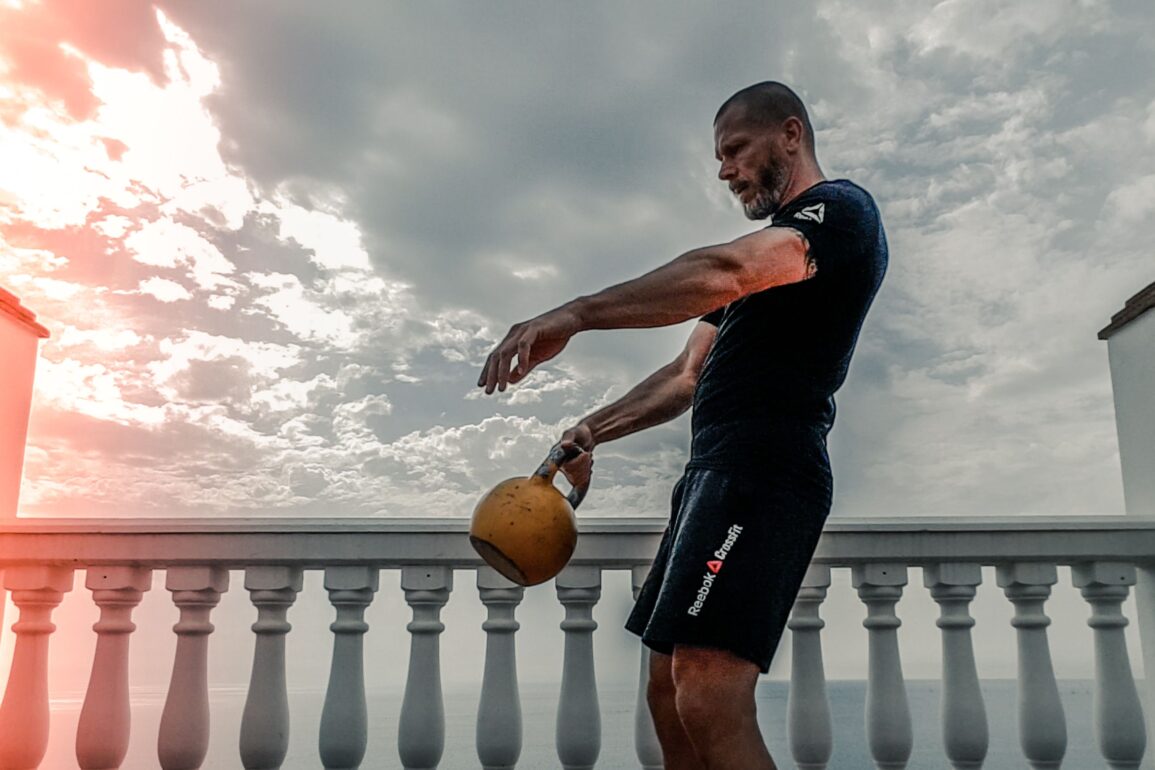
Some experienced trainees also use kettlebell swings to develop explosive hip extension. However, swings require appropriate technique and should not be the first exercise a beginner attempts with a heavy weight.
Start with controlled movements and learn the necessary technique before progressing.
Resistance Bands
Resistance bands are useful for rows, presses, and other exercises that challenge muscles through a range of motion.
They are lightweight, portable, and suitable for many home workouts.
Choose bands that provide appropriate resistance, inspect them regularly for damage, and ensure that any attachment point is secure.
Medicine Balls
Medicine balls can be used for selected strength, coordination, and power exercises.
Depending on the exercise, they may be suitable for controlled rotational movements, carries, or medicine-ball throws.
Explosive throws should be performed only in a suitable space with appropriate equipment and technique.
Cable Machines
Cable machines allow resistance to be applied in different directions.
Exercises such as cable rows, presses, and controlled anti-rotation movements can complement a functional fitness routine.
They also make it easier to adjust resistance in small increments.
Bodyweight
Your bodyweight is often enough to begin.
Squats, wall push-ups, supported lunges, planks, and other bodyweight movements can develop strength and coordination.
As you improve, you can progress to more demanding variations or introduce external resistance.
The best functional fitness equipment is the equipment that allows you to train consistently, safely, and in line with your goals.
11. Functional Fitness for Different Types of Gym-Goers
Functional fitness can be adapted to different lifestyles, provided the program reflects the individual’s physical abilities and priorities.
Functional Fitness for Busy Professionals
People with demanding work schedules may struggle to fit lengthy gym sessions into their routines.
A focused, 30-minute workout can be a practical option.
Prioritize a few major movement patterns, such as squatting, hinging, pushing, and pulling. Add carries or core exercises when time permits.
For example, a busy professional might perform goblet squats, dumbbell rows, incline push-ups, and deadlifts in a carefully planned session.
Walking during breaks and reducing prolonged sitting can complement these workouts.
The objective is to establish a routine that fits your schedule rather than waiting for the perfect time to exercise.
Functional Fitness for Athletes
Athletes often need strength, speed, coordination, balance, and endurance specific to their sport.
Functional fitness exercises can support these qualities, but training should reflect the demands of the sport.
For example, a recreational tennis player might benefit from lower-body strength training, controlled rotational exercises, and appropriate conditioning.
A football player may require acceleration, deceleration, sprinting, and change-of-direction training in addition to general strength work.
Sport-specific training should be designed carefully because the physical demands of different sports vary substantially.
Functional Fitness for Beginners
Beginners should focus on developing basic strength, movement confidence, and consistency.
A suitable program might include chair squats, wall push-ups, resistance-band rows, supported step-ups, and walking.
Start with a manageable workload and increase it gradually.
You do not need to complete an advanced circuit or lift heavy weights to benefit from exercise.
Functional Fitness for Older Adults
For older adults, functional fitness may emphasize maintaining strength, balance, mobility, and independence.
Exercises such as supported chair stands, resistance-band rows, low step-ups, and appropriate walking activities can be useful starting points.
The program should reflect current physical ability and any medical considerations.
People with a history of falls, significant balance difficulties, or conditions affecting mobility may benefit from individualized guidance.
Functional Fitness for People Returning to Exercise
Returning to the gym after a long break can be challenging because your previous training capacity may no longer reflect your current ability.
Begin with lower training volumes and manageable resistance.
Choose exercises that feel comfortable and allow you to maintain good control.
Gradually rebuild your routine rather than attempting to resume your previous workload immediately.
If the break followed surgery, an injury, or a medical condition, seek appropriate professional guidance before returning to demanding exercise.
12. Nutrition and Recovery for Better Functional Fitness Results
Exercise provides the stimulus for adaptation, but nutrition and recovery help your body respond to training.
A balanced approach to eating, hydration, and sleep supports both functional fitness and general health.
Eat Enough Protein
Protein provides amino acids needed to maintain and build muscle tissue.
Sources include eggs, dairy products, fish, poultry, beans, lentils, soy foods, nuts, and seeds.
People who train regularly may benefit from paying attention to their overall protein intake and distributing protein-containing foods across the day.
The appropriate amount depends on factors such as body size, training goals, total energy intake, age, and health status.
A varied diet is generally a sensible starting point, and people with medical conditions affecting protein requirements should seek individualized dietary advice.
Include Carbohydrates for Training Energy
Carbohydrates provide an important source of energy for many forms of physical activity.
Rice, oats, potatoes, whole grains, fruit, and other carbohydrate-containing foods can contribute to a balanced diet.
The amount required depends on training intensity, duration, and personal energy needs.
You do not need to eliminate carbohydrates to develop functional strength or improve fitness.
Include Healthy Fats
Dietary fats support normal bodily functions and help the body absorb fat-soluble vitamins.
Foods such as nuts, seeds, olive oil, and other appropriate sources of unsaturated fats can form part of a balanced diet.
Rather than focusing on a single nutrient, aim for an overall eating pattern that provides adequate energy, protein, fiber, vitamins, and minerals.
Stay Hydrated
Water supports normal physiological function and helps regulate body temperature during exercise.
Drink regularly throughout the day and pay attention to thirst, particularly during hot weather or demanding workouts.
People exercising in hot conditions or sweating heavily for extended periods may need a more individualized hydration strategy.
Prioritize Sleep
Sleep supports recovery, concentration, and physical performance.
Most adults should aim for at least seven hours of sleep per night, although individual requirements vary.
Establishing a consistent sleep schedule, creating a comfortable sleeping environment, and limiting activities that interfere with sleep can help support recovery.
Manage Training Stress
Functional fitness should complement your life rather than become another source of constant exhaustion.
Work demands, family responsibilities, sleep, and other forms of physical activity all influence how much training you can recover from.
If your performance declines over several sessions, consider reducing the training load or allowing additional recovery time.
A sustainable routine is more valuable than an ambitious program that you cannot maintain.
13. How to Measure Progress in Functional Fitness
Traditional fitness measurements often focus on body weight, muscle size, or appearance.
These measurements may be useful, but they do not tell the entire story.
Functional fitness encourages you to evaluate a broader range of physical abilities.
Track Your Strength
Record the resistance, sets, and repetitions you complete for major exercises.
Over time, you may notice that you can perform more repetitions with the same weight or lift a slightly heavier load with consistent technique.
Both can indicate progress.
Monitor Your Movement Control
Notice whether exercises become more comfortable and controlled.
For example, you may find that you can perform chair stands without using your hands or complete step-ups with better stability.
These observations can help you identify improvements that may not appear on a scale.
Measure Cardiovascular Progress
You can track walking distance, cycling duration, or the amount of time you can maintain a comfortable aerobic pace.
As fitness improves, you may find that the same activity feels less demanding.
For a more formal assessment, qualified professionals can help select appropriate cardiovascular fitness tests.
Assess Everyday Performance
Pay attention to meaningful changes in daily activities.
You might notice that carrying shopping bags feels easier, climbing stairs requires less effort, or you can participate in recreational activities for longer.
These changes are valuable because they connect training with the outcomes you actually care about.
However, avoid attributing every improvement to a single exercise. Daily activity, sleep, general health, and other factors can also influence performance.
Evaluate Consistency
One of the simplest ways to assess progress is to review how consistently you train.
A manageable routine performed regularly is often more effective in the long term than a demanding plan that you abandon after a few weeks.
Keep your measurements simple and focus on the trends that matter most to your goals.
14. The Future of Functional Fitness: Training Beyond Appearance
The growing interest in functional fitness reflects a broader understanding of what physical fitness can mean.
For many people, exercise is no longer exclusively about developing visible muscles or reaching a particular body weight.
They also want to maintain energy, improve physical confidence, move comfortably, and preserve the ability to enjoy everyday activities.
This does not mean appearance-based goals have become unimportant. Building muscle, reducing body fat, and improving body composition can remain meaningful objectives.
Instead, the definition of successful training is expanding.
Fitness Is Becoming More Personalized
People have different needs depending on their age, lifestyle, occupation, recreational activities, and previous training experience.
A warehouse worker may need a different program from an office employee. A recreational runner may prioritize different physical qualities from someone whose main goal is maintaining independence in older age.
Functional fitness provides a flexible framework for addressing these differences.
The exercises should be selected according to the individual rather than following a universal workout template.
Technology Can Support Better Training Decisions
Wearable devices and fitness applications can help people track steps, heart rate, workout frequency, and other measures.
These tools can be useful when they encourage consistency and help users understand their activity patterns.
However, data should be interpreted sensibly.
A higher daily step count does not automatically mean that every aspect of fitness has improved. Similarly, a demanding workout recorded by a wearable device is not necessarily more beneficial than a well-designed session with appropriate recovery.
Technology is most useful when it supports good training decisions rather than replacing them.
Long-Term Physical Capability Matters
An effective fitness routine should support both current performance and future physical health.
Developing strength, balance, endurance, and mobility can help people remain active across different stages of life.
This is particularly relevant for people who want to continue traveling, participating in sports, enjoying outdoor activities, and managing everyday responsibilities as they age.
Functional fitness offers one way to pursue these goals through structured, progressive exercise.
Its greatest value may be the reminder that fitness is not only about what you achieve inside the gym. It is also about what your body enables you to do outside it.
15. Frequently Asked Questions About Functional Fitness
What is functional fitness in simple words?
Functional fitness is a type of training that develops physical abilities used in everyday activities. It often includes exercises such as squats, rows, hip hinges, step-ups, carries, and core exercises to improve strength, coordination, balance, and endurance.
Is functional fitness good for beginners?
Yes. Functional fitness can be adapted for beginners through bodyweight exercises, light resistance, and simple movement patterns. Start with manageable exercises, learn proper technique, and increase the difficulty gradually.
Can functional fitness build muscle?
Yes. Functional fitness can build muscle when it includes sufficient resistance, training volume, and progressive overload. People who want to maximize muscle growth may benefit from combining functional exercises with targeted resistance training.
Is functional fitness better than bodybuilding?
Neither approach is universally better. Functional fitness emphasizes practical physical abilities, while bodybuilding typically prioritizes muscle size and muscular development. Both can improve strength, and combining elements of each may be suitable for many gym-goers.
How many days a week should I do functional fitness?
Many beginners can start with two or three strength-training sessions per week, allowing time for recovery between demanding full-body workouts. Additional days can include walking, cycling, or other suitable activities. Your ideal schedule depends on your goals, fitness level, and recovery needs.
Can I do functional fitness at home?
Yes. You can perform chair squats, wall push-ups, bodyweight lunges, supported step-ups, planks, and other exercises at home. Resistance bands and dumbbells can provide additional options.
Make sure you have enough space and a stable surface for the exercises you choose.
Does functional fitness help with weight loss?
Functional fitness can contribute to weight management by increasing physical activity and helping maintain or develop muscle. However, weight loss depends on several factors, including overall energy intake, activity levels, and individual circumstances.
No particular exercise guarantees fat loss.
Is functional fitness suitable for older adults?
It can be, provided the exercises are adapted to the individual’s physical abilities and health needs. Strength, balance, and appropriately selected aerobic activities can support physical function in older adults.
People with medical conditions, significant balance problems, or a history of falls should seek individualized advice.
How long does it take to see functional fitness results?
The timeline varies. Some people notice improvements in exercise confidence or coordination within the first few weeks, while substantial changes in strength and endurance generally require consistent training over time.
Progress depends on training quality, recovery, starting fitness level, and other individual factors.
Do I need expensive equipment for functional fitness?
No. Bodyweight exercises can provide an effective starting point. Resistance bands, dumbbells, kettlebells, and gym machines can expand your options as your strength and experience improve.
Conclusion: Make Functional Fitness Part of Your Everyday Life
Functional fitness offers a practical way to rethink the purpose of exercise.
Instead of focusing exclusively on appearance, it encourages you to develop the strength, balance, coordination, mobility, and endurance that support real-life activities.
From lifting groceries and climbing stairs to participating in sports and maintaining independence as you age, physical capability influences many aspects of everyday life.
The most effective functional fitness program does not need to be complicated. A consistent routine built around squats, hip hinges, pushes, pulls, carries, and appropriate cardiovascular exercise can provide a strong foundation.
Start with exercises that match your current ability. Learn the movements, use manageable resistance, and progress gradually as your body adapts.
Support your training with balanced nutrition, adequate sleep, hydration, and recovery. Track improvements in strength and everyday performance rather than relying exclusively on appearance or body weight.
Most importantly, choose a program that fits your lifestyle and that you can maintain over time.
You do not have to choose between building an impressive physique and developing practical strength. With thoughtful exercise selection, you can work toward both.
Functional fitness is ultimately about building a body that does more than look strong. It is about developing the physical capacity to move confidently, handle everyday challenges, and remain active throughout life.