



Introduction
In today’s fast-paced world, maintaining physical, mental, and emotional well-being can be challenging. Stress, poor eating habits, lack of sleep, and sedentary lifestyles have become common issues affecting millions of people worldwide. While modern medicine often focuses on treating symptoms, Ayurveda emphasizes prevention and balance through daily habits that align with nature’s rhythms.
One of Ayurveda’s most valuable concepts is Dinacharya, which translates to “daily routine.” Dinacharya is a systematic approach to living that helps synchronize the body, mind, and spirit with the natural cycles of the day. These ancient practices have been followed for thousands of years and continue to offer profound health benefits in modern times.
By adopting an Ayurvedic daily routine, you can improve digestion, boost immunity, increase energy levels, enhance mental clarity, reduce stress, and promote longevity. This comprehensive guide explores every aspect of Dinacharya and explains how you can integrate these timeless principles into your daily life.
Understanding Dinacharya in Ayurveda
Dinacharya is a Sanskrit term composed of two words:
- Dina = Day
- Charya = Activity or Conduct
Together, Dinacharya means “daily conduct” or “daily routine.”
According to Ayurveda, health is maintained when the body’s biological rhythms are aligned with nature. The sun, moon, seasons, and daily cycles all influence our physical and mental functions.
Ancient Ayurvedic texts describe Dinacharya as an essential pillar of preventive healthcare. Rather than waiting for illness to occur, Ayurveda encourages healthy daily habits that keep the body balanced and resilient.
Why Dinacharya Matters

Modern research increasingly supports the Ayurvedic concept of circadian rhythms. Our hormones, digestion, metabolism, sleep cycles, and cognitive performance all follow predictable daily patterns.
When these rhythms become disrupted, health problems can arise, including:
- Digestive disorders
- Insomnia
- Anxiety
- Obesity
- Fatigue
- Hormonal imbalances
- Reduced immunity
Following Dinacharya helps restore harmony between the body’s internal clock and the external environment.
Benefits include:
- Better digestion
- Improved metabolism
- Increased energy
- Enhanced mental focus
- Stronger immunity
- Better sleep quality
- Reduced stress
- Healthier skin
- Greater emotional stability
Wake Up Before Sunrise
One of Ayurveda’s most important recommendations is waking during Brahma Muhurta, approximately 90 minutes before sunrise.
This time is considered ideal because the atmosphere is calm and sattvic, promoting clarity and spiritual awareness.
Benefits of Early Rising
- Increased productivity
- Better concentration
- Enhanced mood
- Improved respiratory function
- Greater mental clarity
- More time for self-care practices
Practical Tips
If waking before sunrise feels difficult:
- Gradually adjust bedtime.
- Avoid screens before sleeping.
- Maintain consistent sleep schedules.
- Wake 15 minutes earlier each week.
Express Gratitude and Positive Intentions
Before leaving bed, Ayurveda encourages a moment of mindfulness.
Spend a few minutes:
- Expressing gratitude
- Setting daily intentions
- Practicing deep breathing
- Cultivating positive thoughts
This simple practice creates a positive mental foundation for the entire day.
Drink Warm Water in the Morning
After waking, drink one or two glasses of warm water.
This Ayurvedic practice helps:
- Stimulate digestion
- Promote bowel movements
- Flush toxins
- Hydrate the body
- Support metabolism
Some individuals may benefit from adding:
- Lemon
- Ginger
- Honey (not in very hot water)
Elimination and Detoxification
Proper elimination is a key indicator of health in Ayurveda.
Regular morning bowel movements help remove accumulated waste and toxins.
Tips to support healthy elimination:
- Wake early
- Drink warm water
- Eat fiber-rich foods
- Exercise regularly
- Manage stress
Oral Hygiene in Ayurveda
Ayurveda places great emphasis on oral care.
Tongue Scraping
Use a copper or stainless-steel tongue scraper.
Benefits include:
- Removing toxins
- Improving taste perception
- Reducing bad breath
- Supporting digestion
Brushing Teeth
Traditional herbal tooth powders often contain:
- Neem
- Clove
- Licorice
- Triphala
These herbs help maintain oral health naturally.
Oil Pulling (Gandusha)
Oil pulling involves swishing oil in the mouth for several minutes.
Common oils:
- Sesame oil
- Coconut oil
Benefits:
- Stronger gums
- Fresher breath
- Reduced oral bacteria
- Improved oral hygiene
Nasya Therapy
Nasya involves applying herbal oil to the nostrils.
Benefits include:
- Improved breathing
- Reduced sinus congestion
- Enhanced mental clarity
- Better focus
Always consult a qualified Ayurvedic practitioner before using medicated oils.
Eye Care Practices
Ayurveda recommends protecting the eyes through:
- Splashing cool water
- Blinking exercises
- Reduced screen exposure
- Adequate sleep
Healthy eyes contribute to overall vitality.
Abhyanga: Daily Self-Massage
Abhyanga is one of Ayurveda’s most powerful self-care practices.
Warm herbal oil is applied throughout the body using gentle massage techniques.
Benefits include:
- Improved circulation
- Better skin health
- Reduced stress
- Stronger joints
- Enhanced sleep quality
Oils According to Dosha
Vata
- Sesame oil
Pitta
- Coconut oil
Kapha
- Mustard oil
Regular Abhyanga nourishes tissues and calms the nervous system.
Exercise According to Ayurveda
Physical activity is essential but should be balanced.
Recommended exercises:
- Yoga
- Walking
- Swimming
- Cycling
- Stretching
Benefits include:
- Improved circulation
- Better digestion
- Weight management
- Enhanced mood
Ayurveda advises exercising to about 50% of maximum capacity rather than pushing the body excessively.
Yoga and Pranayama
Yoga and breathing exercises help maintain physical and mental balance.
Recommended Asanas
- Surya Namaskar
- Tadasana
- Bhujangasana
- Vrikshasana
- Paschimottanasana
Pranayama Practices
- Nadi Shodhana
- Bhramari
- Ujjayi
- Kapalabhati (when appropriate)
Benefits include:
- Better lung capacity
- Reduced anxiety
- Increased energy
- Improved focus
Meditation for Mental Wellness
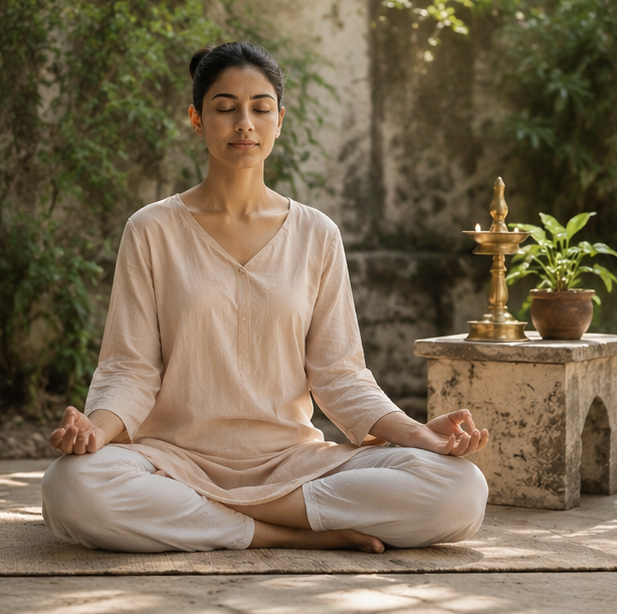
Meditation is a cornerstone of Ayurvedic living.
Daily meditation can:
- Reduce stress
- Improve emotional balance
- Enhance concentration
- Promote self-awareness
Even 10–20 minutes daily can create noticeable benefits.
Bathing and Personal Hygiene
Bathing refreshes both body and mind.
Ayurveda recommends:
- Warm water for the body
- Cooler water for the head
Benefits:
- Increased circulation
- Better alertness
- Improved cleanliness
Ayurvedic Breakfast Guidelines
Breakfast should be light and easy to digest.
Examples:
- Fresh fruits
- Stewed apples
- Oatmeal
- Herbal teas
- Warm porridges
Avoid heavy processed foods early in the day.
The Importance of Lunch
Ayurveda considers lunch the most important meal.
Digestive fire (Agni) is strongest around midday.
Ideal lunch foods include:
- Whole grains
- Vegetables
- Legumes
- Healthy fats
- Fresh herbs
A nourishing lunch supports sustained energy throughout the day.
Healthy Work Habits
Ayurveda encourages mindful work practices.
Suggestions:
- Take breaks regularly
- Maintain proper posture
- Stay hydrated
- Practice deep breathing
Balanced productivity prevents burnout.
Afternoon Wellness Practices
During the afternoon:
- Stretch briefly
- Drink herbal tea
- Walk outdoors
- Avoid excessive caffeine
These habits maintain energy naturally.
Ayurvedic Dinner Guidelines
Dinner should be lighter than lunch.
Recommended foods:
- Soups
- Cooked vegetables
- Khichdi
- Light grains
Avoid eating late at night.
Evening Relaxation Rituals
Create a calming evening routine:
- Reduce screen time
- Read uplifting books
- Practice gratitude
- Enjoy herbal tea
These practices prepare the body for restful sleep.
Sleep According to Ayurveda
Quality sleep is essential for healing and rejuvenation.
Recommendations:
- Sleep before 10 PM
- Maintain consistent schedules
- Avoid heavy meals before bed
Benefits include:
- Better hormone balance
- Enhanced immunity
- Improved cognitive function
Dinacharya for Different Doshas
Vata Dosha
Focus on:
- Regular routines
- Warm foods
- Oil massage
- Gentle exercise
Pitta Dosha
Focus on:
- Cooling foods
- Moderate exercise
- Stress management
- Adequate hydration
Kapha Dosha
Focus on:
- Vigorous exercise
- Light meals
- Active lifestyle
- Early rising
Common Mistakes to Avoid
- Skipping breakfast
- Eating late at night
- Excessive screen time
- Irregular sleep schedules
- Chronic stress
- Overexercising
- Ignoring digestive issues
How to Start Dinacharya Gradually

Begin with:
- Early rising
- Warm water
- Tongue scraping
- Short meditation
- Consistent meal times
Add additional practices slowly for sustainable success.
Long-Term Benefits of Following Dinacharya
Consistent practice may support:
- Healthy digestion
- Strong immunity
- Better mental health
- Balanced hormones
- Increased longevity
- Enhanced vitality
- Greater happiness
Conclusion
Dinacharya is far more than a schedule—it is a holistic blueprint for living in harmony with nature. By following Ayurvedic daily practices such as waking early, maintaining proper hygiene, exercising mindfully, eating according to digestive strength, and prioritizing rest, you can transform your health naturally.
The beauty of Ayurveda lies in its simplicity. Small daily habits practiced consistently can create profound and lasting changes in physical health, mental clarity, emotional stability, and overall well-being. Whether you adopt a few principles or embrace the entire routine, Dinacharya offers a practical pathway toward vibrant health and balanced living.
CLICK HERE TO READ ANOTHER RELEVANT ARTICLE RELATED TO AYURVEDIC HOLISTIC LIVING